- wingtriptravel@gmail.com
- +975 - 1798-2556
- Wing Trip Tours and Treks, Thori Lam. P. O. Box 1501 ,Thimphu, Kingdom of Bhutan

Menu
WILD EAST RODUNG-LA TREK
tour overview
This journey across the top of eastern Bhutan follows what used to be an important trade route before completion of the national highway. The trek is tough, and involves a tremendously long, steep descent. Few groups take up the challenge which this long and demanding journey presents. The account below is incomplete as WING TRIP guides are still researching alternative routes/night halts, etc. for some sections of the trek, which we hope to be able to offer on a regular basis within 2-3 years.
Season: The recommended season for this trek is October, early November and late spring.
On arrival at Paro airport, you will be met by your WING TRIP representative, and transferred to your hotel on completion of arrival formalities. Evening visit to Paro market and town. Overnight at the hotel in Paro.
This morning we visit Ta Dzong, originally built as a fortified watchtower to protect Rinpung Dzong, and in 1968 inaugurated as the National Museum. We then follow a trail down the hillside to Rinpung Dzong, a fortress/monastery which has a long and fascinating history.
After lunch we drive up to the end of Paro valley to visit Drukgyel Dzong, built in 1646 by Shabdrung Ngawang Namgyal to commemorate victory over Tibetan invaders. We then visit 7th century Kyichu Lhakhang, one of the oldest shrines in the country, and afterwards call at a traditional Bhutanese farmhouse to get an idea of the lifestyle of local people.
In the evening we drive to Thimphu, the capital. Overnight at the hotel in Thimphu.
Full day of sightseeing in Thimphu, including visits to the following, as time permits:
* National Memorial Chorten – built as a memorial to Bhutan’s third king (“the father of modern Bhutan”) and as a monument to peace;
* Tashichhodzong – the impressive fortress/monastery housing some ministries, His Majesty’s secretariat, and the central monk body;
* National Library – established in the late 1960s primarily to conserve the literary treasures which form a significant part of Bhutan’s cultural heritage, it now holds an extensive collection of Buddhist texts and manuscripts;
* Institute for Zorig Chusum, more commonly known as the Painting School, where students learn the 13 traditional arts and crafts of Bhutan;
* National Institute of Traditional Medicine (outside only) – herbal medicines are compounded and dispensed here, and traditional medicine practitioners trained.
In the evening visit the Handicrafts Emporium which has displays of a wide assortment of intricately hand-woven textiles and other craft products. Overnight at the hotel in Thimphu.
After breakfast, we set off for Trongsa, crossing Dochu-la pass (3,088m) about 45 min. after leaving Thimphu. On a clear day the view from the pass is superb. We then descend to the valley, reaching the former capital Punakha about two hours later. After visiting Punakha Dzong, built by Shabdrung Ngawang Namgyal in the 17th century and recently restored to its original splendour, we drive south to Wangduephodrang town where lunch will be served. After lunch we visit Wangdue Dzong then continue on to Trongsa across Pele-la pass (3,300m), the traditional boundary between east and west. Stop briefly en route at Chendebji Chorten, an 18th century stupa built in the Nepalese style with eyes painted at the four cardinal points.
In the evening, visit Ta Dzong (watchtower above Trongsa Dzong) and the town of Trongsa. Overnight at the lodge in Trongsa.
In the Morning visit Trongsa Dzong, the largest fortress in the country. The foundations of this imposing edifice were laid down in 1543 by Shabdrung Ngawang Namgyal’s great grandfather, and the Shabdrung himself completed the work in 1648. Both the first and second kings of Bhutan ruled the country from this ancient seat of power over central and eastern Bhutan.
We then drive to Bumthang, one of the most spectacular valleys in Bhutan and also the holy heartland of Buddhism. After lunch we walk around the town and also visit some of the holy temples for which Bumthang is famous, including the 7th century Jambey Lhakhang, and Kurje Lhakhang, highly revered as a meditation place of Bhutan’s “patron saint”, Guru Rinpoche. We also visit Jakar Dzong, “the castle of the white bird”. Overnight at the lodge in Bumthang.
We spend the morning sightseeing in the valley, and then have lunch at the lodge before departure for Tang, or else a picnic lunch along the way. We drive out of town along the main highway east for about 20 minutes, and then turn left onto a rough road which winds up the hillside through coniferous forest and into the Tang valley. It is only about 20 km. to Tang village, but due to the condition of the road the drive takes 2-3 hours. We begin our trek at Tang, with a 30-minute walk up to Ogyenchoeling Manor, situated on a hillock above the village, where we spend the night. Overnight at the manor guesthouse or camp in the courtyard (2,850m).
17km, 5-6 hours
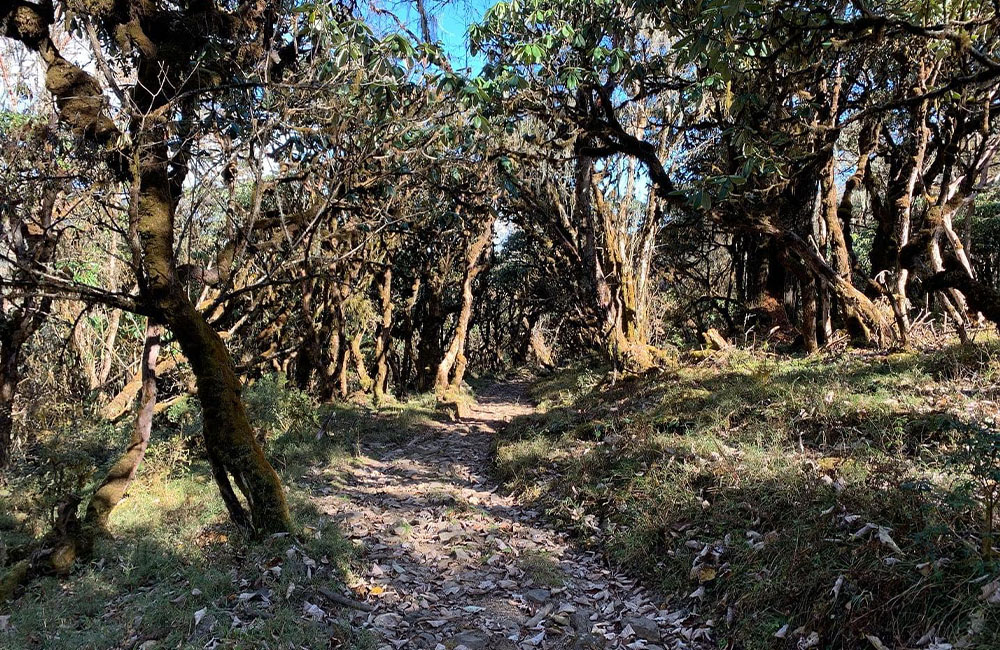
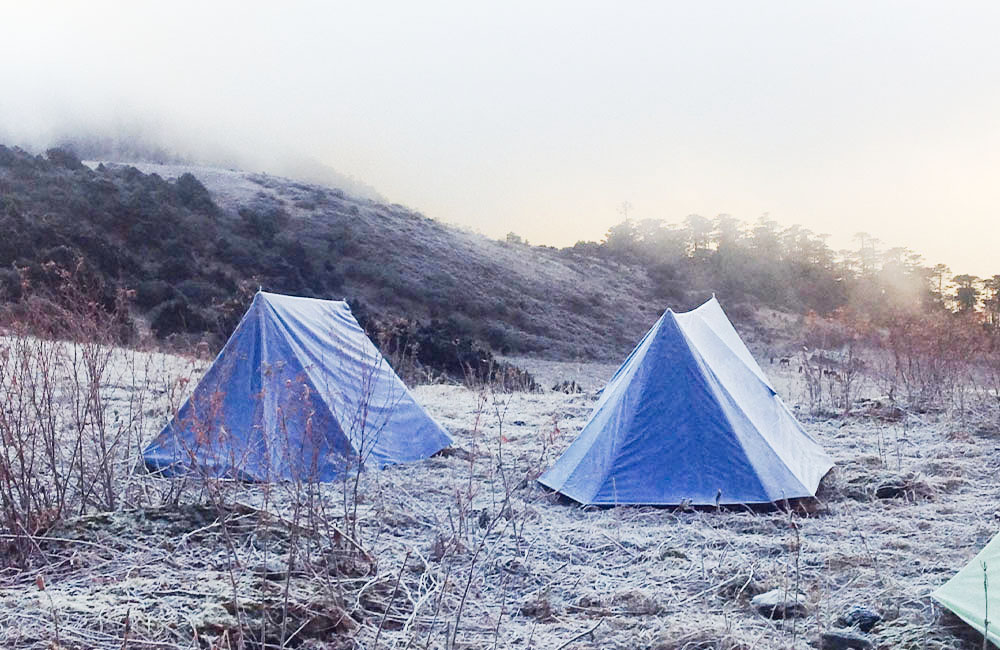
Today’s walk takes us through bamboos, hemlock and finally up into the alpine forest. Overnight camp at 3,600m.
20km, 7-8 hours
The trail takes us up for half an hour to reach Rodung-la (4,160m), and then continues steadily downhill through rhododendrons, conifers and broadleafed forest, patches of dwarf bamboo and finally ferns and more tropical species to the village of Ungaar at the head of the valley below. We camp overnight near Ungaar (1,770m) just beyond some pine trees.
Today’s steady descent of 2,390 meters is quite tough on the knees, so for those trekkers with knee problems we would recommend halting overnight at a campsite by a ruined stone building (a grain storehouse during the times of the first and second kings) about half way down the trail (2,950m).
21km, 7-8 hours
Today’s trail winds gently up and down through chirpine forests and across open hillsides covered in lemon grass. We pass through several villages then climb up to Khaine Lhakhang (2,010m), reputed to be one of the 108 temples which the Tibetan king, Songtsen Gampo built in 659 to subdue demons. The main protective deity is a ferocious god named Taxan, depicted on horseback. A two-day festival is celebrated here in mid-November. From Khaine Lhakhang to Taskila is a gentle descent of 2-3 hours. We camp overnight near Taskila village (1,800m).
20km, 5-6 hours
We start our day with a leisurely walk down to Menjabi (sometimes spelt Minjibi) village, where beautiful houses and terraced fields are scattered across the gently sloping hillsides. Legend says that in the olden days many beautiful ladies could be found in Menjabi, but that outsiders did not marry them for fear of the leprosy which was prevalent in the area at that time (but is no longer, due to modern treatment methods). After passing Menjabi we have a short climb up to Tage-la (1,760m). From here the journey is all downhill till we reach Tangmachu village (2,200m), situated just above a major rice growing area. There is a big secondary school here. In autumn, we can camp in the fields, but if we are passing through during the cultivation season, we will carry on down the hill and camp by the side of the Kuri chu (2,000m).
16km, 4-5 hours
The trail takes us down to the river crossing at Kuri Zam, then winds gradually up through paddy fields and villages to Menji, where we camp for the night above the village beside Darchu Pang Lhakhang (1,830m).
20km, 6-7 hours
We continue uphill on a steep, rough trail which passes through thick forest. We come out onto a ridge-top meadow after a couple of hours, but soon our trail takes us into the forest again. We finally reach some herders’ huts at Pemi, in a narrow ridge-top clearing from which there is a view of a forested gorge and mountains beyond. Other than the huts, there is no sign of habitation, although Menji villagers use this area as a summer pasture. We camp overnight under forest shelter at 2,400m.
21km, 6-7 hours
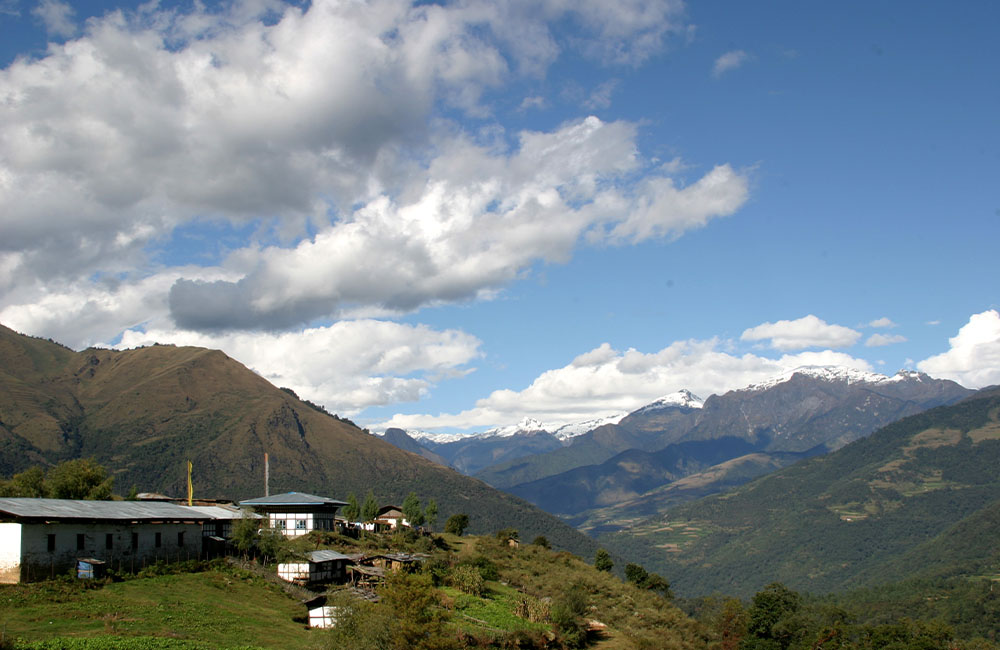
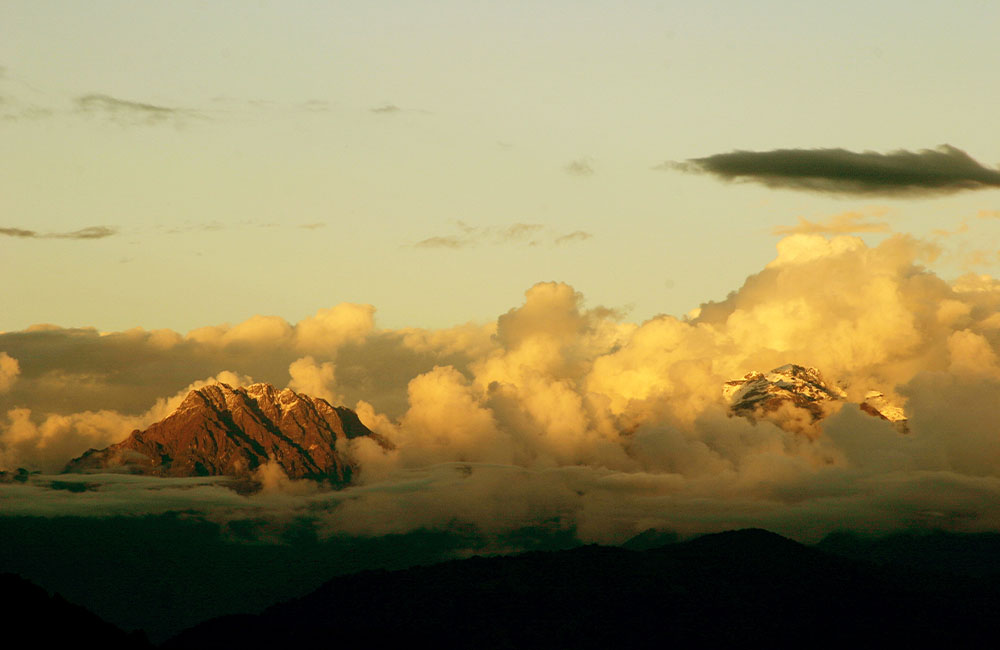
Continue up to Dong-la (3,900m) and pause at the pass to enjoy a splendid view of the surrounding snowy peaks. Then descend through thick evergreen forest to reach our camp site at Taupang (2,450m), a forest clearing with a wooden shelter in it.
24km, 8-9 hours
We set off early as this is the longest day of the trek. The trail runs gradually downhill, passing through chirpine and sub-tropical hardwood forests. We camp overnight at Trashiyangtse (1,700m).
End of trek. WING TRIP transport takes us to Trashigang town, administrative center of Bhutan’s easternmost district, Trashigang. Overnight at the lodge in Trashigang.
Morning visit to the 17th century Trashigang Dzong perched on the edge of a steep hillside and commanding a spectacular view of the valley far below. Then visit the town and take a stroll through the local market, where people from nearby places come to trade.
After that, proceed to Samdrup Jongkhar. The road winds upwards around the contours of the hillside to Kanglung, home of Sherubtse College, then further ascends to Yongphu-la (2,190m). There are splendid views of the region through which you have traveled from the ascent up to this pass. The road then descends fairly rapidly, passing through cultivated areas and then dropping down into dense tropical forest with an abundance of teak, bamboo and ferns on the approach to the Indian plains. Overnight at the hotel in Samdrup Jongkhar.
The drive to Guwahati in Assam takes about three hours. Your WING TRIP representative will drop you there at the hotel or airport for your onward program.
What is included
- Double room on twin sharing basis in government approved 3 star hotels
- Camping equipment and haulage for trekking tours
- Single room supplement is additional of USD 45 per night per room
- All three meals (does not cover water and other beverages ordered in hotels/restaurants)
- Bottled mineral water for the entire trip (except water ordered in the hotels and restaurants)
- Afternoon tea and snacks
- English speaking and knowledgeable guide
- Comfortable SUV and a reliable driver
- Museum entrance fees
- Visa fee and processing charges
- Tourism Development Fund
- Government taxes
- All administrative cost
- Full service & assistance before, during and after your Bhutan trip
Not included
- Airfare to and from Bhutan (we can arrange you tickets for you if you wish)
- Any other beverages (alcoholic or non-alcoholic) including water ordered in restaurants and hotels
- Travel or health insurance
- Wire transfer
- Laundry
- Gratuity/Tip for guides and drivers
Share this page :
Other Packages
Published by WING TRIP TOURS & TREKS
Copyright © WING TRIP TOUR & TREKS
No part of this publication may be reproduced without prior permission, except by tour operators working with WING TRIP TOUR & TREK. Such tour operators may reproduce sections of text for the purpose of giving out information to clients to be booked on our tours