- wingtriptravel@gmail.com
- +975 - 1798-2556
- Wing Trip Tours and Treks, Thori Lam. P. O. Box 1501 ,Thimphu, Kingdom of Bhutan

Menu
Ideal Family holidays
Tour Overview
Come with your family and be a part of Bhutan’s family. Welcome to Bhutan!
There is a famous saying – don’t listen to what they say… go see! And that definitely goes for Bhutan. This popular destination is one of the most influential countries in terms of environment and happiness, and without a doubt, it is one of the most transformative places to visit. Recognized recently by Lonely Planet as the number one country to visit, Bhutan is also an immersive destination for families with school-age children. There is so much on offer in Bhutan to keep the sense of wonder alive in a child. The best way to take their eyes off screens is to take them to a place where there is so much more to see.
Be humble and happy
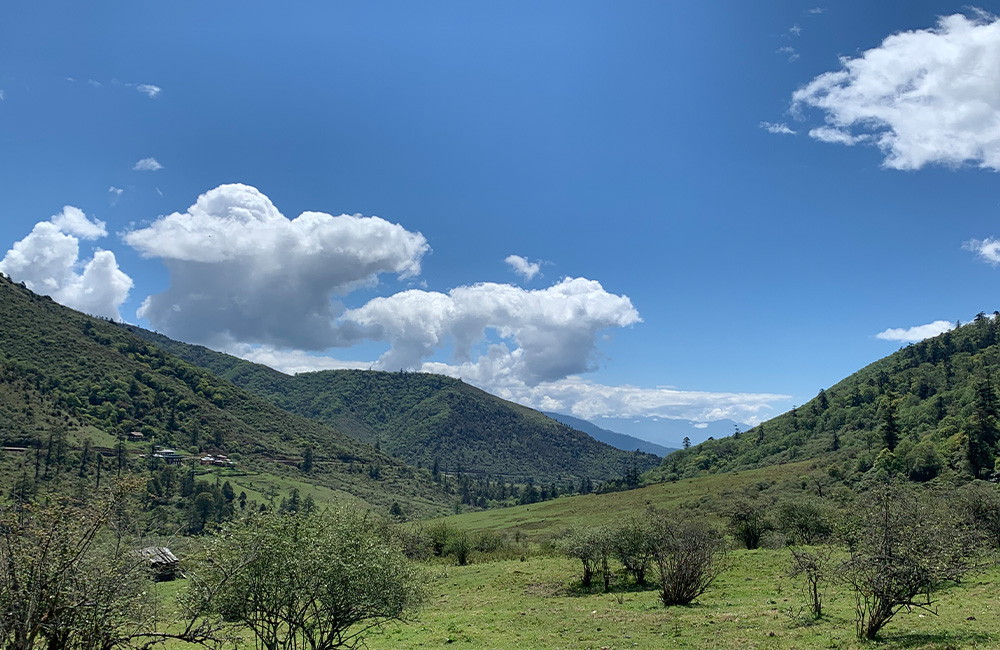
Travel by vehicle to the 3,000+ meter-high Dochu La Pass, where (weather permitting) you can see the magnificent snow-capped Himalayas. The tallest mountain range in the world passes through Bhutan, Nepal, India, Pakistan, Afghanistan, and China. On the summit of the Dochu La, you can walk amongst 108 memorial chortens (Buddhist shrines) and clusters of fluttering prayer flags. Take a deep breath and enjoy the view over a coffee in the beautiful cafeteria. It’s a view to take your breath away! And this is an easy drive to play with the snow in winter with most places covered in snow. It also has some good open spaces for the children to take a hike and enjoy the nature.
Archery is Bhutan’s national sport! It’s a challenging sport and there are plenty of opportunities to pick up a bow and arrow while you are visiting the kingdom. Ask if your hotel offers archery experiences, or learn about the sport at the Simply Bhutan living museum in Thimphu. Trying a new sport is perhaps the fastest and most fun way to come closer, to work together as a unit, to teach your children to be a sport (and who knows, maybe the husbands too!). To win or lose is not the point, to play is. Enjoy the Bhutanese hospitality and traditional song and dance as you learn to play.
Tiger’s Nest Monastery, constructed in 1692 to commemorate a series of events that brought Buddhism to Bhutan, is considered to be Bhutan’s holiest site. It is a place that most Bhutanese hope to visit at least once in their lifetime. For many people, it’s one of the ‘don’t miss’ experiences in Bhutan.
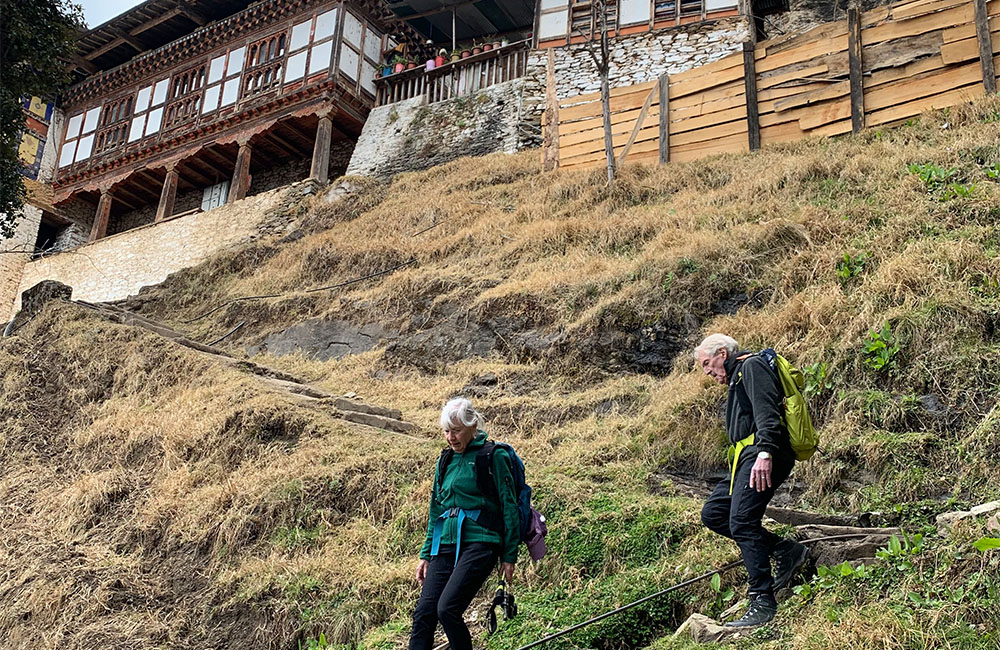
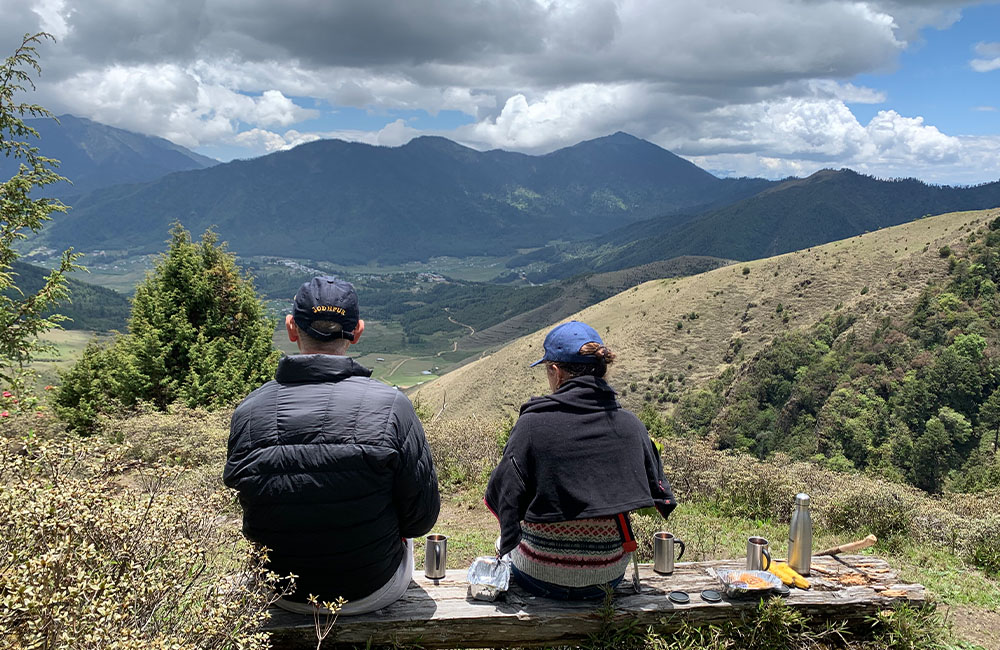
Clinging to a cliff 3,000 feet above the valley floor, reaching Tiger’s Nest Monastery requires a steady two-hour climb to 10,000 feet above sea level. The trail to Tiger’s Nest Monastery begins approximately 6 miles from the town of Paro. Paro is at 7,000 feet above sea level, so there is an elevation gain of 3,000 feet on the way to Tiger’s Nest: it’s literally and figuratively one of the highlights of every family vacation in Bhutan. Ponies are available along the trail to transport younger guests to around halfway to the top of the hike. Take a deep breath, not just because you are out of breath from the trek, but because it’s just breathtaking! Families can also explore other hikes that are not so long or steep. Feel free to opt for a one-hour hike or a hike that explores the Kingdom over a couple of days with camping along the trail. Experience Bhutan through its valleys, forests and wildlife.
Tantric practices, symbolic mysticism, masks, choreography and music are all symbolic and all are believed to have their roots in Buddhist rituals. Amongst the most famous is the Bhutanese dancer, Pema Lingpa. The popular belief is that many of the dances he performed were celestial Buddhist dances that appeared to him in his dreams.
There are mainly three kinds of dances; Religious dances that are performed by monks; secular dances performed by lay people; and oracle dances performed by oracles. There are more than 150 festivals in Bhutan. Families are encouraged to check the festival calendar on the Department of Tourism’s website to find the best one for you!
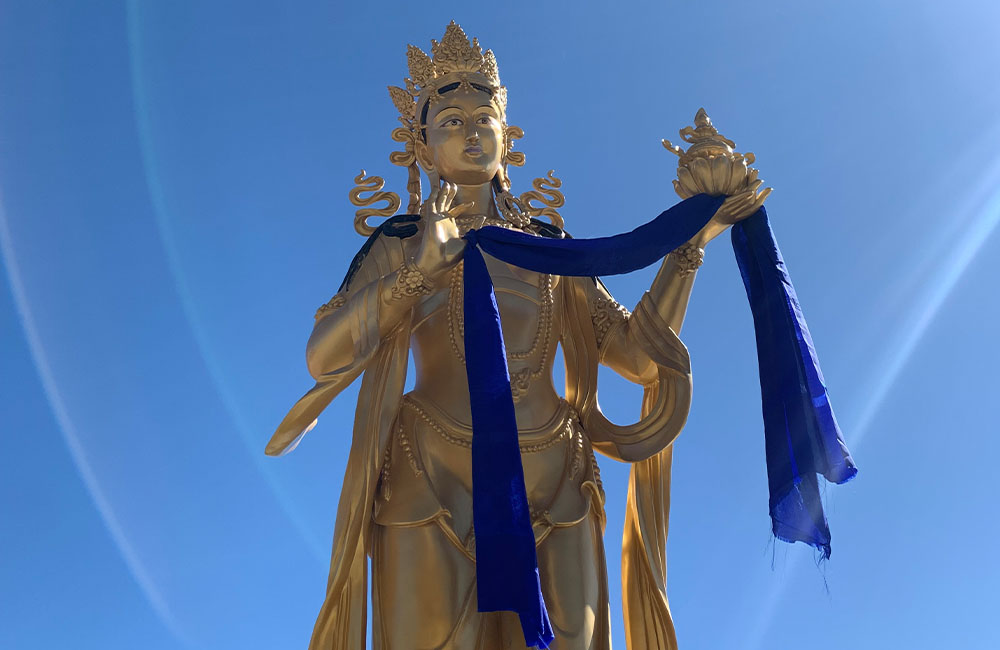
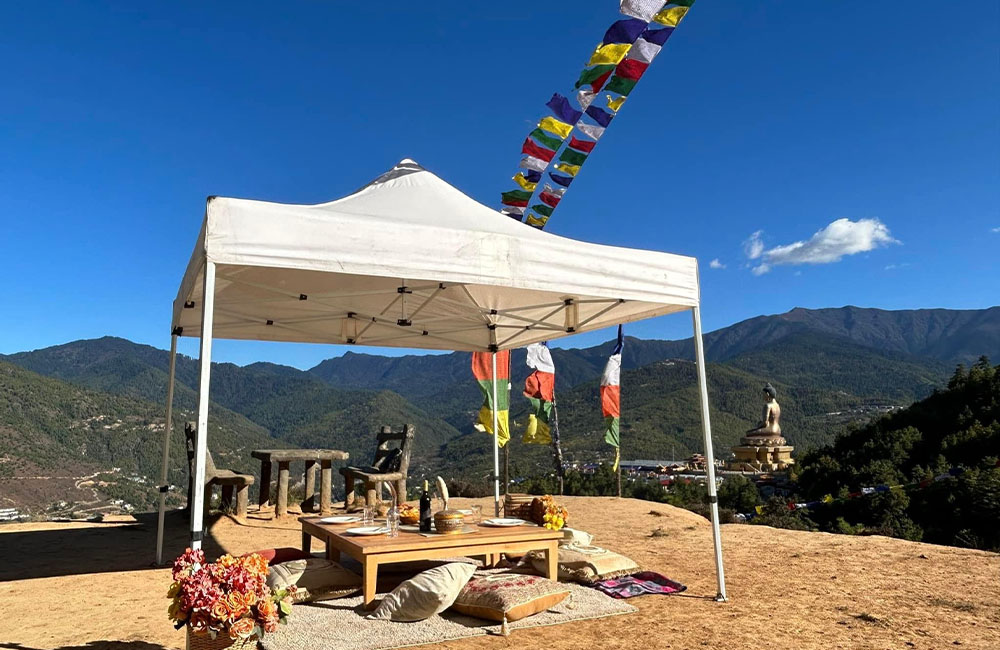
The majestic monument is one of the largest statues of Buddha in the world. A massive 125,000 statues of Buddha between 8 and 12-inches-tall fill the massive body. Buddha Dordenma sits atop of a large meditation hall and outdoor meeting space on a hilltop overlooking Thimpu Valley. The 51.5-meter statue is the most visited attraction in Thimphu.
The Bhutanese believe that the cranes were sent from heaven as avatars of their ancestors. Bring your best cameras along, because the black-necked cranes are a sight to behold. Adult black-necked cranes are four-feet-tall with a red crown and long, thin legs. Their head, neck, wings and tail are black, save for a small light grey spot that stretches backwards from their yellow eyes, as well as ashy grey body feathers. Meanwhile, young cranes have a black and gray body with a cinnamon-brown head. There are also some festivals during this period that celebrate the arrival of the Black Neck Cranes to Bhutan!
Just like how the mountains are gorgeous, the clean, aqua-marine water in Bhutan is also breath taking. Spend a few hours on the water and see a different side to Bhutan. Rafting on the Mo Chhu and the Pho Chhu gives you a chance to opt for how adventurous you want to be. For beginners and families who want an enjoyable and scenic float down the river, we recommend the Mo Chhu. What makes rafting in the Pho Chu and Mo Chu rivers of Punakha memorable is the fact that its route includes the Punakha Dzong, famous for its unparalleled beauty.
The national animal of Bhutan, the Takin can be best spotted in the Takin preserve located in Motithang that’s a 15 min drive from the heart of Thimphu town. It was initially established as a mini zoo with some Takins and other endangered species of animals. Later, the fourth king of Bhutan decreed that it was against the philosophy of Buddhism to hold animals captive and were let in the wild but was put back into reserve after finding the animals wandering the streets looking for food.
Join us for an exciting adventure in the Kingdom of Happiness trekking on local Yueta horses through the Himalayan Mountains. Following through some of the most beautiful valleys in the Himalaya you will visit monasteries, ancient temples and local villages who make mountain life look easy. The easy pace allows time to spot some of the unique and hardy fauna and flora that have adapted to live on the mountain sides, and spending the night in tents will reveal incredible night skies. At the beginning and end of the trip there are also visits to some of the most spiritual and spectacular sites in Bhutan including Taktsang Goemba, Drukgyel Dzong, Punakha Dzong and Khamsum Yuelley Namgyal Chorten.
Learn how to cook Bhutanese food as a family! Bhutan has an abundance of local fresh organic vegetables and simple ways of Bhutanese cooking introduces families to a basic or rudimentary style of cooking, prevalent in the Himalayan region. Learn how to make classic favourites such as momos (dumplings), Ema Datsi (chili & cheese), buckwheat noodles and traditional salads. Enjoy spending time with your teacher and then savour the meal as a family.
Mountain biking is a popular activity among visitors and locals alike. There are mountain biking trails through small hilltop villages and alpine forests in places like Thimphu, Paro, Punakha, Phobjikha, Haa and Bumthang. Enjoy the rugged topography and descending wild Himalayan trails that few people have ridden. Test your strength and stamina as you ride the exhilarating feeder roads and biking trails.
There are 13 traditional arts and crafts in Bhutan termed as the ‘zorig chu sum’ including painting, wood carving, carpentry, sculpting, textile weaving, ornament making, and bamboo weaving. Families will love experiencing the process of creating these traditional Bhutanese arts and crafts, and making customized souvenirs to take back home for memories of their visit to Bhutan. For a more contemporary experience, the first contemporary art studio, VAST (Voluntary Artists’ Studio Thimphu) offers weekend art classes led by senior artists where participants learn the basics of drawing and work their way through the use of other mediums like acrylics, oil pastels and water colours.
Bhutan’s first helicopter company, the Royal Bhutan Helicopter Services Limited (RBHSL) that was initially founded for emergency medical evacuations is available for private hire. The flight can take you around the striking Taktshang monastery, over the sacred Jomolhari peak, flying over scenic hills, valleys, clear blue glacial lakes and forested mountains, providing spectacular bird’s eye views of Bhutan’s landscapes. You can also take a helicopter ride and enjoy family picnics.
Khuru is a traditional Bhutanese sport. These darts are made of wood with sharp iron tips, to be thrown at a small target approximately 50 feet away. Whether your kids are prone to boredom, or you want to cut short their screen time by taking them outdoors, you can keep them entertained through this fun-filled community sport.
There are 13 traditional arts and crafts in Bhutan termed as the ‘zorig chu sum’ including painting, wood carving, carpentry, sculpting, textile weaving, ornament making, and bamboo weaving. Families will love experiencing the process of creating these traditional Bhutanese arts and crafts, and making customized souvenirs to take back home for memories of their visit to Bhutan.
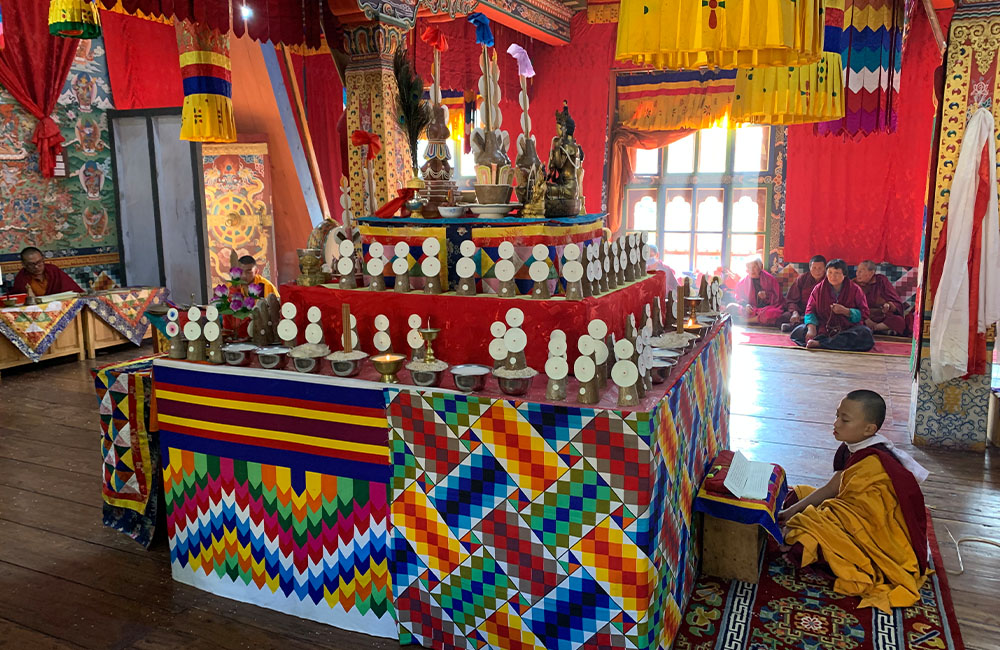
While home stays may not offer facilities like hotels and resorts, staying in a local farmhouse with a Bhutanese family is the perfect way to experience the daily life of Bhutanese people. You can join the daily rituals of Bhutanese people living in villages and participate in cultivation and harvesting alongside other farmers, pick seasonal fruits and vegetables, and eat authentic Bhutanese dishes unspoiled by copied restaurant recipes. If the family of the house is conducting a religious ritual, you can even help in making torma (offerings made from dough and colored butter).
Another lesser-known activity that kids can enjoy is making colored-rice mandala. It is a religious and cultural practice to adorn red carpets for chief guests in important events with patterns made with multi-colored-rice. The patterns are usually the eight lucky signs, or other traditional Bhutanese motifs. Making these patterns can be a fun and creative way, for both children and adults to learn about traditional Bhutanese arts and customs.
What is included
- Double room on twin sharing basis in government approved 3 star hotels
- Single room supplement is additional of USD 45 per night per room
- All three meals (does not cover water and other beverages ordered in hotels/restaurants)
- Bottled mineral water for the entire trip (except water ordered in the hotels and restaurants)
- Afternoon tea and snacks
- English speaking and knowledgeable guide
- Comfortable SUV and a reliable driver
- Museum entrance fees
- Visa fee and processing charges
- Tourism Development Fund
- Government taxes
- All administrative cost
- Full service & assistance before, during and after your Bhutan trip
Not included
- Airfare to and from Bhutan (we can arrange you tickets for you if you wish)
- Any other beverages (alcoholic or non-alcoholic) including water ordered in restaurants and hotels
- Travel or health insurance
- Wire transfer
- Laundry
- Gratuity/Tip for guides and drivers