- wingtriptravel@gmail.com
- +975 - 1798-2556
- Wing Trip Tours and Treks, Thori Lam. P. O. Box 1501 ,Thimphu, Kingdom of Bhutan

Menu
SEA BREAK
BEST MONTHS SEPTEMBER - MARCH
Duration: 7/ 1 night camping, 1 night home stay
Places covered: Thimphu, Paro
Your journey begins with the most spectacular mountain flight with views of major Himalayan peaks such as Everest, Kanchenjunga and Makalu, and on the final approach Bhutan’s own snowy peaks, the sacred Jhomolhari, Jichu Drake and Tserimgang. You fly over the southern hills, known as ‘dwars’, or gateways into the Himalayas as they rise from the plains until they meet the great snow-capped peaks that rise up to the sky.
As soon as you arrive in Paro, a guide will welcome you and transfer you to Thimphu, the capital of Bhutan. You'll get your first impressions of this mountainous and peaceful kingdom on the road. As you pass flourishing forests and beautiful deep valleys, you'll see with your own eyes how Bhutan manages to be the only carbon-positive country in the world.
In Thimphu, you'll immediately start a tour of the city highlights. Begin with the great Tashicho Dzong, and then head to Memorial Chorten, where many residents go for their daily prayer. The tour finishes at the impressive Golden Giant Buddha statue, which is of spiritual importance to the locals. After admiring the statue, you can turn your head toward the valley and delight in your first sunset in the country.
Once the sky begins to turn dark, you will go to your accommodation for check-in.
Overnight at Hotel.
Thimphu, perhaps the most unusual capital city in the world also serves as the seat of government.
This bustling town is home to Bhutan’s royal family, the civil service, and foreign missions with representation in Bhutan. It is also the headquarters for a number of internationally funded development projects.
Today’s full day of sightseeing in Thimphu valley includes visits to:
* Buddha Dordenma statue sitting on top of a hill overlooking Thimphu. TheStatue of Sakyamuni Buddha is one of the tallest in Asia (51.5 m). The site of Buddha Dordenmaoffers unobstructed views over the capital town.
* The National Memorial Chorten- the building of this landmark was originally envisaged by Bhutan’s third king, His Majesty JigmeDorji Wangchuck, who had wanted to erect a monument to world peace and prosperity. Completed in 1974 after his untimely death, it is both a memorial to the Late King (“the father of modern Bhutan”), and a monument to peace.
* Folk Heritage and Textile Museums: These museums, both of which opened in 2001, provide fascinating insights into Bhutanese material culture and way of life.
* Institute for ZorigChusum: Commonly known as the Painting School, the Institute offers a six-year course on the 13 traditional arts and crafts of Bhutan. On a visit one can see students learning the various skills taught at the school.
* Handicrafts Emporium: This government-run enterprise displays a wide range of beautifully hand-woven textiles and craft products. It also carries a small collection of books on Bhutan, Buddhism and Himalayan culture.
* National Library, which holds a vast collection of Buddhist texts and manuscripts, some dating back several hundred years, as well as modern academic books mainly on Himalayan culture and religion.
In the evening, take a stroll along the town’s main street.
Overnight at Hotel.
Day hikes could be fun. Many a trail takes walkers past remote and ancient monasteries, through deep forest of towering trees, wildflowers and birds. And by such is a Lungchutse hike. Lungchutse hike is a beautiful hike through the forest of hemlock and rhododendrons. It is one of the best hikes in Bhutan that you can try. It takes you to the two of the most beautiful monasteries at hill top, Trashigang Goenpa and Lungchutse Temple.
Your driver can drop you to Dochula Pass and begin your hike to Lungchutse temple.
Elevation: 3100 to 3569 meters
Time Taken: 2 hours
The given fact is correct if you just walk through the trails. But if you play through the trails, it can get longer.
This hike has lot to offer to you: tall trees, the sight of rare birds, wild mushrooms and most importantly 360 degree view of Himalayan range. Everything around is picturesque. Photos do not justify the beauty of the place as seen through the lens of the living eyes.
As you hike, you will be greeted by carpeted rhododendrons, giving you the sense of aesthetic and soul enriching awareness. It is a quiet a world out of the world. Specially in month of April and May when the flowers are in bloom it is magical trek amidst the various hues of white, red, pink and purple.
It is like witnessing the subtle play of nature and all its contentedness.
You know you are half way up to Lungchutse when you reach Pang Melong-a big clearing in the middle of the forest at an altitude of 3302m. Above the ground on a little ridge, is Yak’s herder’s camp. Pang Melong is a good place to rest for some time and enjoy the packed lunch however we stopped at the shed which is little further from Pang Melong to have our lunch as we were early too have lunch at Pang Melong.
After 20 minutes hike from the Lunch shed we found ourselves on top of the mountain where Lungchutse Temple sits precariously.It is situated approximately at 3566 meters, looking over the surrounding hills and valley. It is a perfect place to enjoy the bounties of nature.
If time permits, visit Laperi Botanical Park.
Overnight in a farm house with a family.
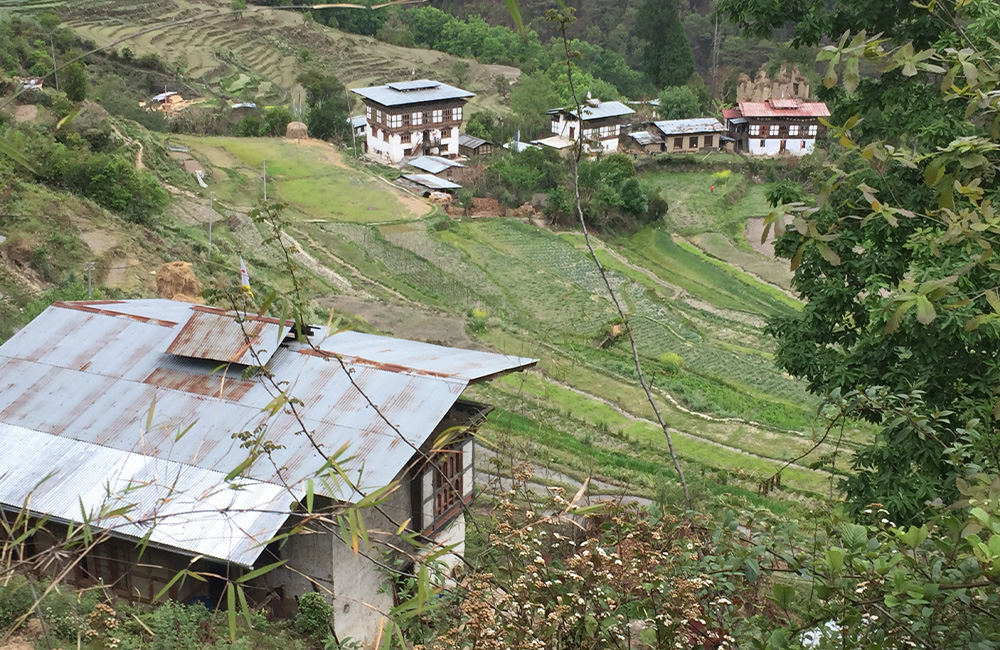
After easy morning rejoin the group and we begin the day following in the footsteps of the natives of Thimphu and Punakha who migrated on this trail for centuries. After an hour descend through the mix forest of temperate and tropical forest we will be greeted by the neighboring village Lunitsawa and Thinleygang. You will descend these beautiful villages through rice paddies and beautifully dotted traditional homes of the villagers.
After lunch, follow the Trail as it passes through small farming villages. Descend to Thinleygang village and a farm road where your campsite will be waiting. A lone house nearby our camp is very sacred and famous in the history of Bhutan and its people. Legend calls that a Buddhist saint, Lama Drukpa Kuenley or commonly known as Devine Madman, once shot an arrow from Tibet and the arrow landed on the window of the family house.
Your guide will take you to the temple and the house for visit to Learn about its relevance to the ‘Divine Madman’, Drukpa Kuenley. Spend the evening relaxing under the stars along the Punatsangchu River.
Trek Distance: 13.2kilometres(8.2miles)
Estimated Trek: Duration:8hours
Elevation Gain: 195metres
Starting Elevation: 1560metres(5148feet)
Ending Elevation: 1225metres(4042feet)
Maximum Elevation: 1778metres (5867feet)
Overnight in a camp.
A short drive through the Punakha valley, we begin our hike crossing the suspension bridge and ascending a series of switchbacks to Khasum Yueley Namgyal Temple. From this temple, there is a grand view of the Mo Chhu (Female River) valley below. We then descend from the temple and follow a well-worn path down the valley through rice fields and small villages. Along the way we are rewarded with stunning views – the terraced rice paddies providing an exotic backdrop to the river below.
After enjoying a picnic lunch along the river, we continue to Punakha Dzong. Initially built in 17th century for unifying the country, it is the second oldest fortress in the country and it served as the original capital until 1955. Today it is the home to Bhutan’s spiritual leader, Je Khenpo, who resides here with 1000 monks during winter months.
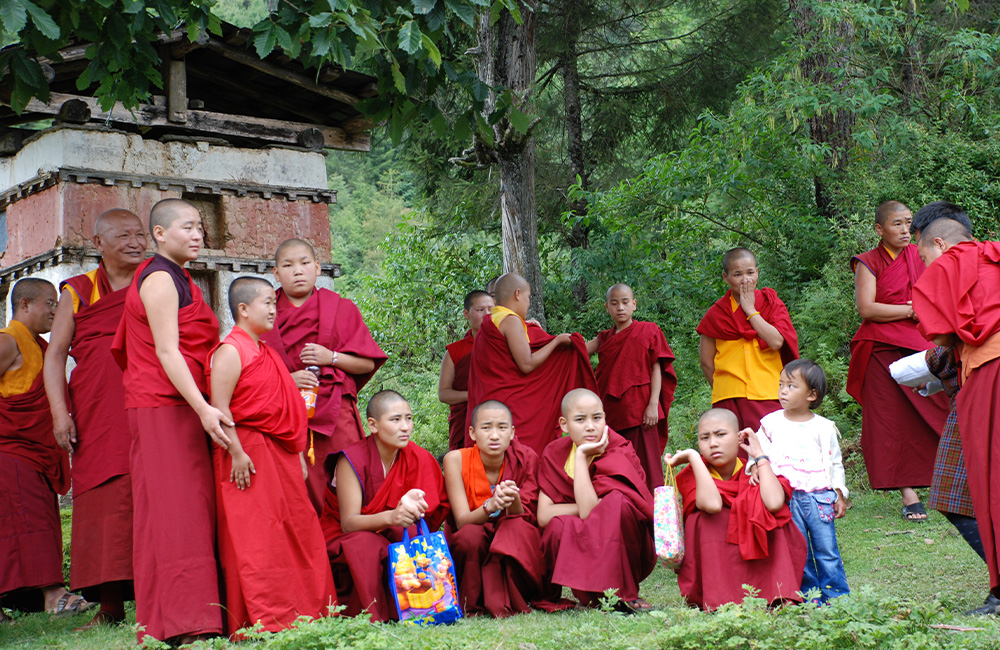
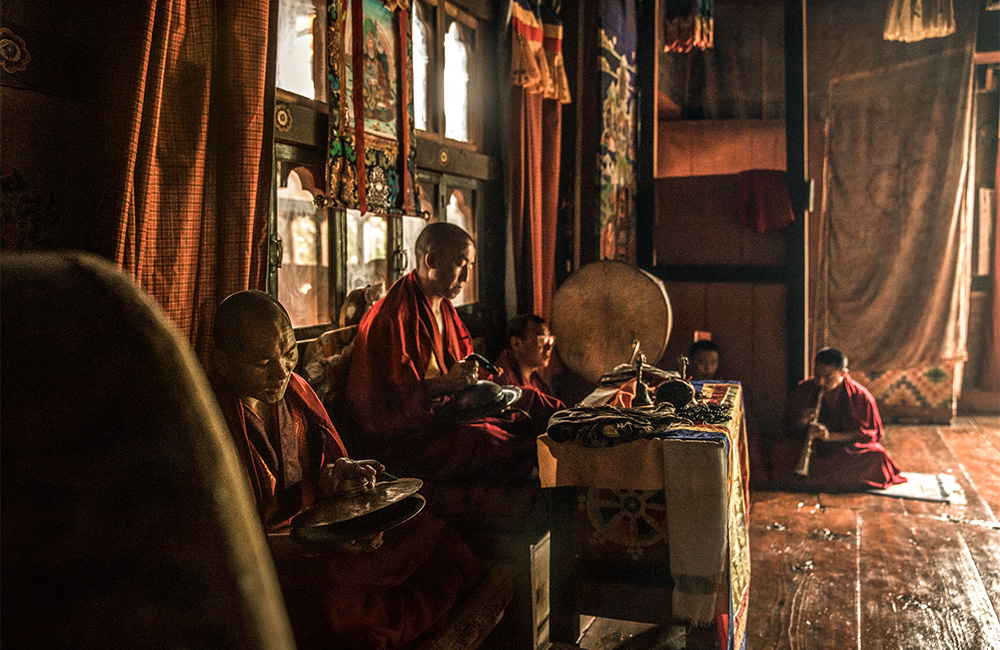
In the afternoon, we have the special opportunity to visit the Nalanda Buddhist Institute and learn more about monks live and meditation.
Activity overview: hiking and cultural tour
Activity level: Easy to moderate with 657 elevation gain.
Activity length: 2 hours
Drive time: approximately 45 minutes.
Overnight in a hotel In Punakha.
After breakfast we will proceed to Paro Valley.
Enroute stop at the Iron Chain Bridge built in the early 15th century by the great iron bridge builder and Poet - Yogi Thangtong Gyalpo (1385-1464), who also built Dungtse Lhakhang in Paro and many iron bridges throughout Bhutan and Tibet. The iron bridge was carried away by floods in 1969 and a traditional style bridge with the original iron chains was built in 2005.
We will then proceed to cross the bridge to visit Tachogang Lhakang also known as “The Temple of the excellent horse”, also built by Thangthong Gyalpo.
Continue to Paro.
This beautiful valley encapsulates a rich culture, scenic beauty and hundreds of myths and legends. It is home to many of Bhutan’s oldest temples and monasteries, the country’s only airport, and the National Museum. Mt. Chomolhari (7,300m) reigns in white glory at the northern end of the valley, its glacial waters plunging through deep gorges to form the Pa Chu (Paro River). The Paro valley is one of the kingdom’s most fertile, producing the bulk of Bhutan’s famous red rice from its terraced fields.
On arrival visit the National Museum. The museum collection includes ancient Bhutanese art and artifacts, weapons, coins, stamps and a small natural history collection. (Closed on Govt. Holidays)
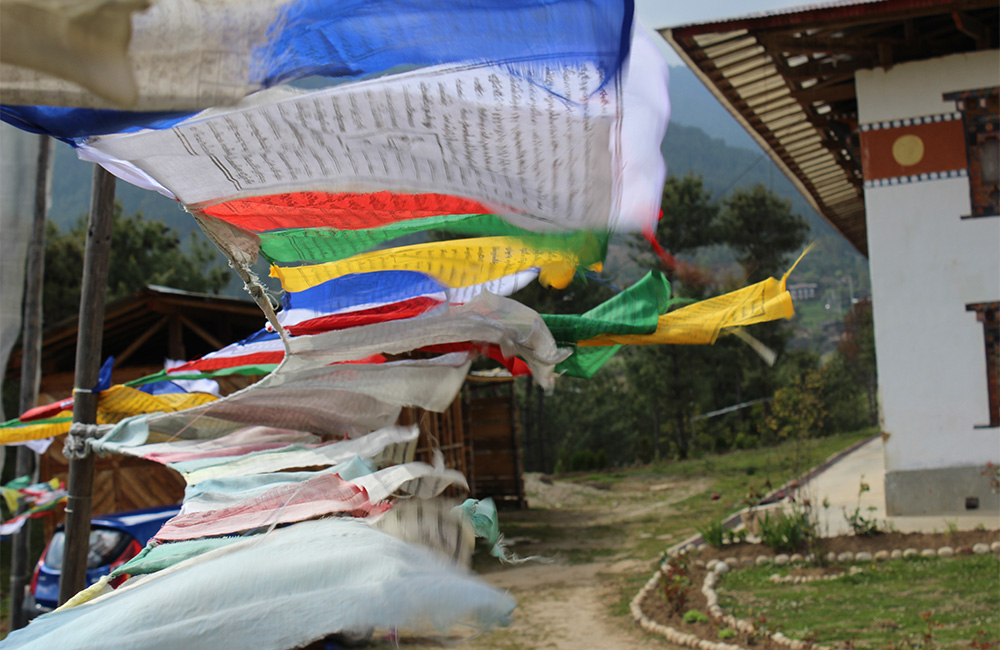
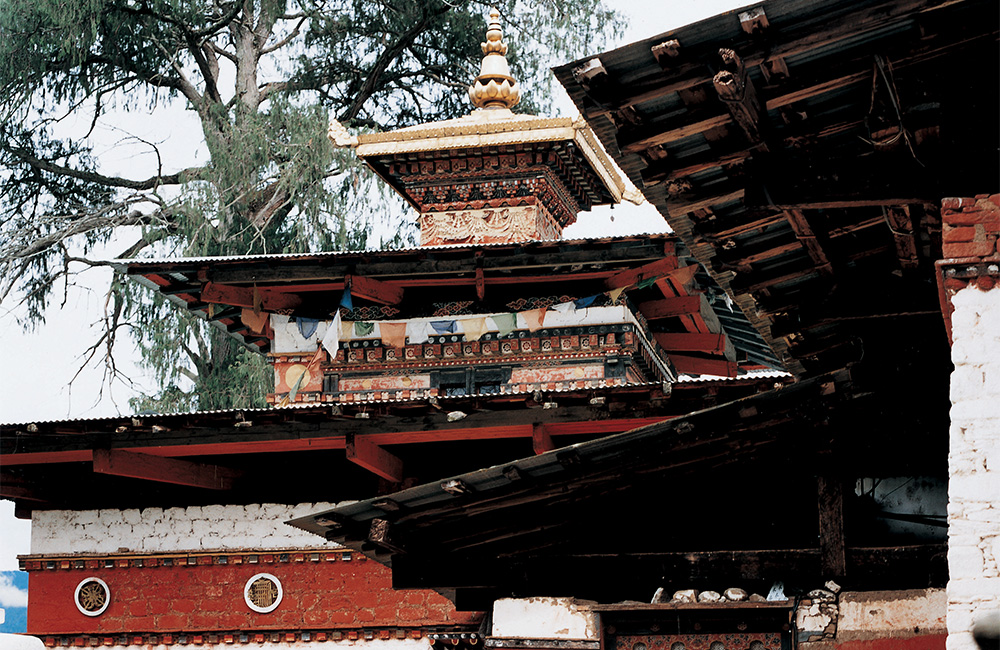
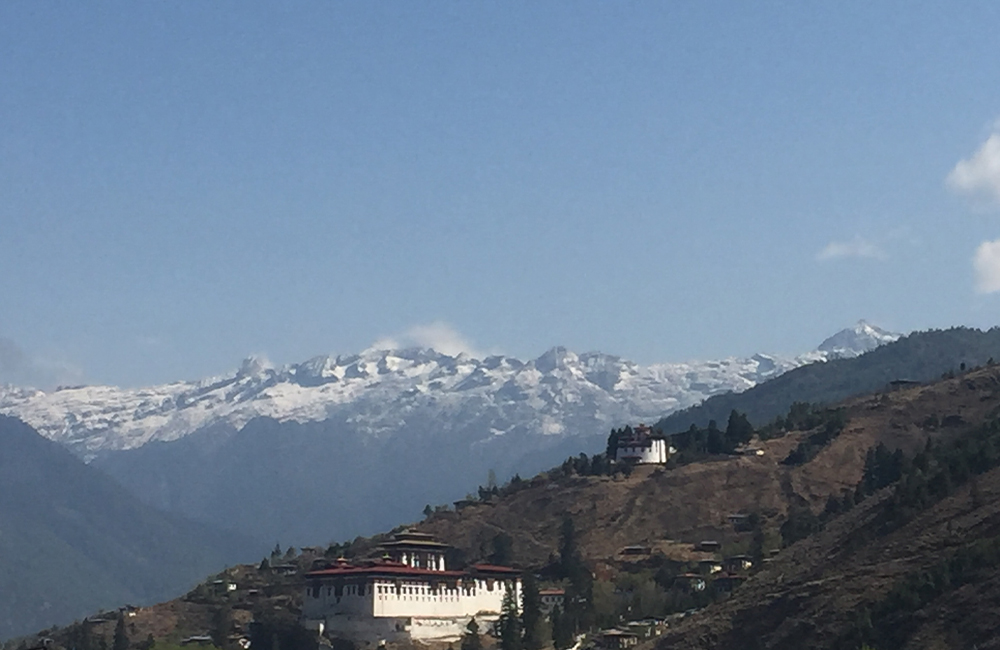
Then walk down a hillside trail to visit Rinpung Dzong (Paro Dzong) situated at a commanding height overlooking Paro valley. Built by Shabdrung Ngawang Namgyal in 1646, this Dzong now houses Paro’s monk body and the offices of the civil administration and is symbolic as the religious and secular center of all affairs of the valley. Walk down a paved stone path running alongside the imposing outer walls and across a traditional cantilever bridge adorned with colorful prayer flags. If you drive a little further down along the river, there is a good spot where you can capture all three sites - the Cantilever Bridge, Paro Dzong and the National Museum.
Also visit Kichu Lhakhang, one of the oldest temples in the country. The temple is one of the 108 temples built in the Himalayas by the Tibetan king, Songtsen Gampo to subdue a demoness in the 7th century. The building of this temple marks the introduction of Buddhism in Bhutan.
Evening explore the quaint Paro town.
Overnight at Hotel in Paro.
In the morning we gear up for the excursion up to Taktsang Monastery, also known as the Tiger’s Nest. It is believed that Guru Rinpoche, the founding father of the Bhutanese form of Mahayana Buddhism, arrived here on the back of a tigress and meditated at this monastery. The main structure was severely damaged by fire in 1998, but after many years of painstaking restoration work, the complex has now been fully restored to its former glory.
On return we will head back to the hotel and get ready for your journey back out of Bhutan
Overnight at Hotel.
We have finally reached the end of our journey and we hope that you had a wonderful time in Bhutan, hopefully you have made some memories to take back with you and we hope that we will see you again!
Early breakfast in the hotel, then drive to the airport for flight to onward destination.
What is included
- Double room on twin sharing basis in government approved 3 star hotels
- Single room supplement is additional of USD 45 per night per room
- All three meals (does not cover water and other beverages ordered in hotels/restaurants)
- Bottled mineral water for the entire trip (except water ordered in the hotels and restaurants)
- Afternoon tea and snacks
- English speaking and knowledgeable guide
- Comfortable SUV and a reliable driver
- Museum entrance fees
- Visa fee and processing charges
- Tourism Development Fund
- Government taxes
- All administrative cost
- Full service & assistance before, during and after your Bhutan trip
Not included
- Airfare to and from Bhutan (we can arrange you tickets for you if you wish)
- Any other beverages (alcoholic or non-alcoholic) including water ordered in restaurants and hotels
- Travel or health insurance
- Wire transfer
- Laundry
- Gratuity/Tip for guides and drivers
Share this page :
Other Packages
Please note that some of the sights/itinerary may change due to season, weather, national holidays, and special events. We maintain the rights to alter the itinerary since tours are made in advance and unforeseen circumstances that mandate change may arise. Itinerary changes are made to improve your overall travel experience in Bhutan.