- wingtriptravel@gmail.com
- +975 - 1798-2556
- Wing Trip Tours and Treks, Thori Lam. P. O. Box 1501 ,Thimphu, Kingdom of Bhutan

Menu
MYTHS AND MOUNTAINS
Highlights
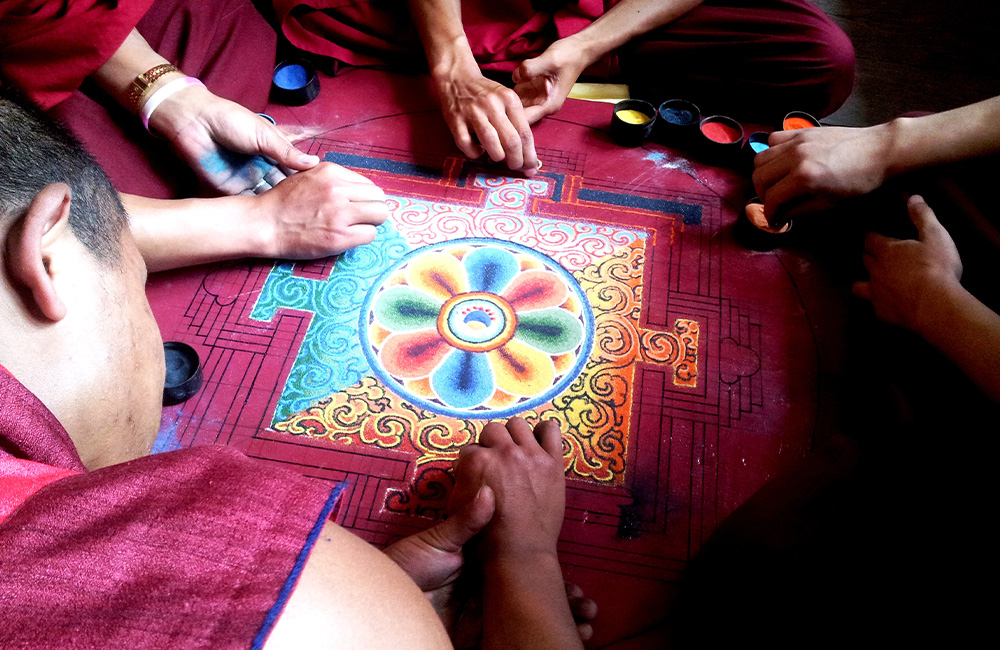
Mandala offering in Thimphu
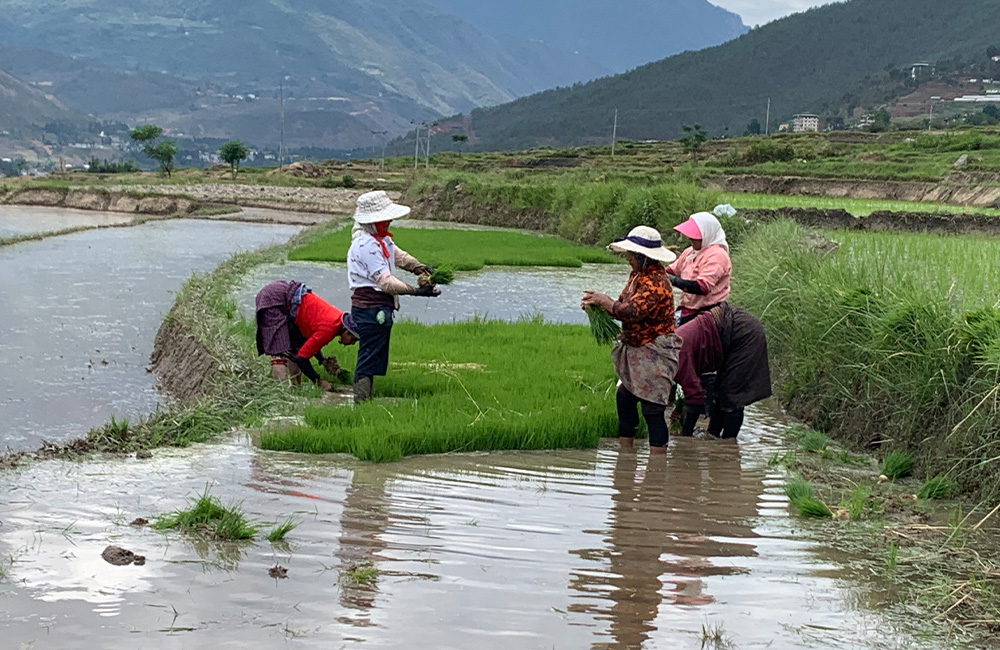
Raft along the Mochu (female) river in Punakha
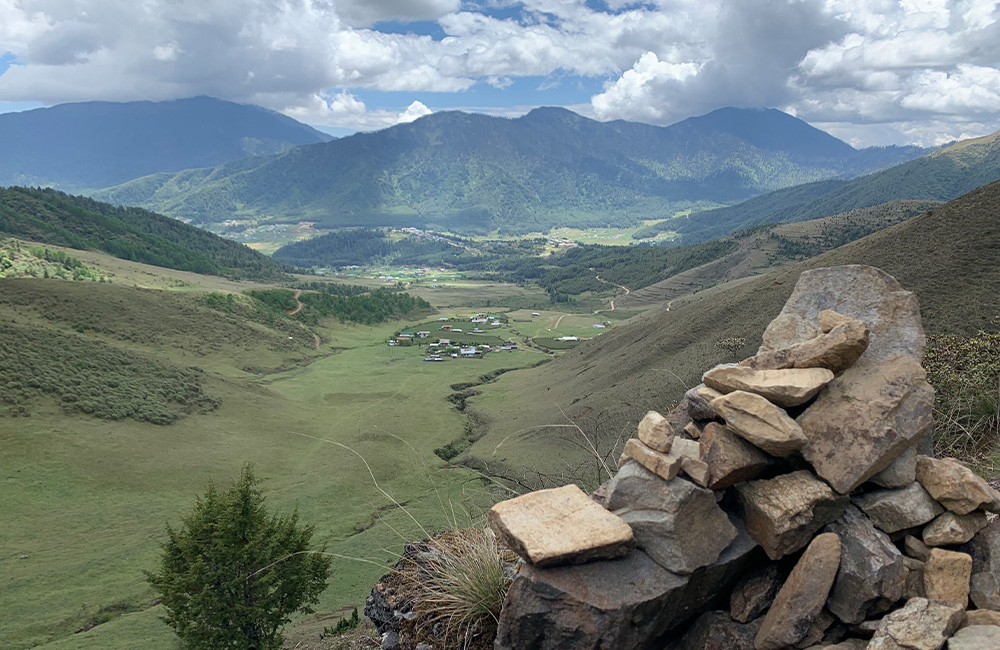
Explore one of the few glacial valleys of Phobjikha
Share a romantic candle lit dinner in a remote place
A game of archery with the locals
A traditional meal of emadatsi (chili and cheese), fiery ara or sweet sinchang (local alcohol)
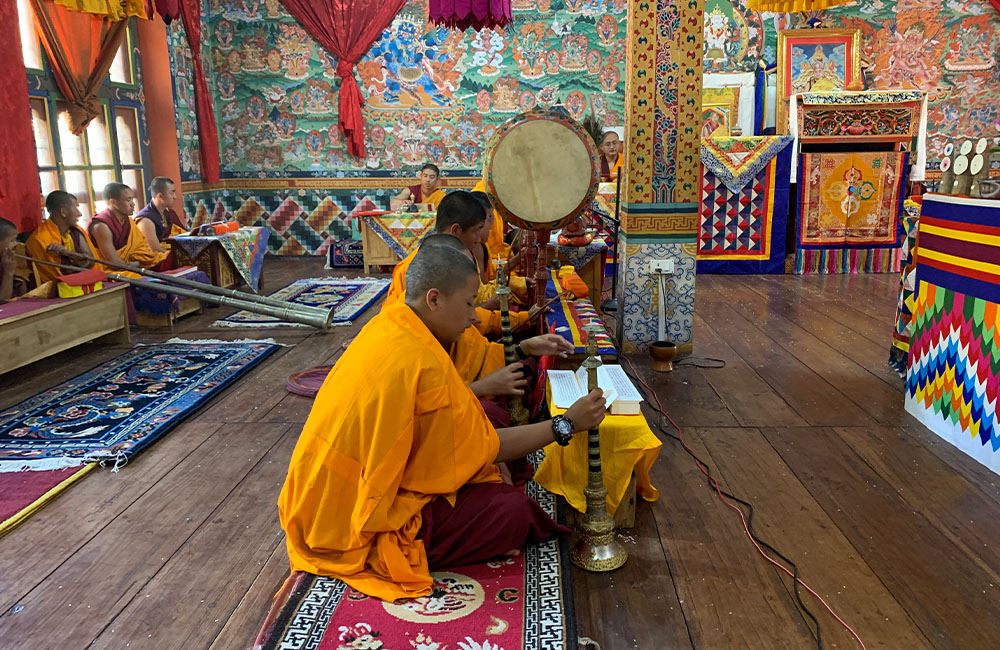
Offer butter lamps and prayers.
Hike to the famous Tiger’s Nest Monastery located on a sheer cliff 900 m above the valley
A traditional "khada" ceremony this morning as a symbolic scarf is wrapped around you, with blessings for a serene and safe journey. Travel by flight to Paro in the spiritual mountain kingdom of Bhutan with its striking monasteries and magnificent mountain scenery. Here, you'll also see traditional dzongs dotting the landscape, a distinctive type of fortress architecture with towering exterior walls surrounding complexes of courtyards, temples, and monks' accommodations. Tucked away between China and India in the heart of the Himalayas, Bhutan remains a uniquely distinct country. Upon arrival in historic Paro, drive to the capital city of Thimphu, a fabulous blend of old and new. Time to stroll through the main square and get acquainted with your new surroundings. Tonight, attend an orientation meeting with your new Tour Manager about the adventure that awaits you in Bhutan, followed by a Welcome Dinner together at the hotel.
Rest of the day at leisure or you may want to take a stroll through this lively town.
This morning, you join Buddhist performing their daily rituals of turning the giant prayer wheels at the whitewashed National Memorial Chorten with its shining golden finial, dedicated to the third king of Bhutan. Next, drive to Tallest Buddha Statue hill, Buddha Dordhenma, visit the temple and give few minutes for independent meditation practice. The area offers great view of the Thimphhu valley below and onward to visit the School of Arts and Crafts, where students learn different Bhutanese crafts over six years including painting, sculpture, embroidery and much more.
After enjoying good lunch in town, drive to Pangri Zampa, the only school of Astrology, where you learn about this very popular study followed by many families and young monks. Later after your horoscopy being read we drive to Takin preserve where you will finally meet a Takin, the rare national animal of Bhutan. The rest of the day is yours. Perhaps shop in one of the handicraft stores to bring some treasures back home.
An early start this morning as you drive through the scenic terrain of the Himalayas to Punakha, the ancient capital of Bhutan, pausing at Dochhula Pass to view the astounding snow-clad peaks of Bhutan (on a clear day.) You pass over one hundred monuments and see many colorful prayer flags along your route on your way to the Royal Botanical gardens. After lunch in the village of Lobesa, continue to Punakha Dzong, considered the most beautiful dzong in the country with its towering whitewashed walls accented by elaborately painted gold, red and black wood. By tradition, all of the Kings of Bhutan are crowned here in the 100-pillar Coronation Hall, decorated with massive gold statues and murals depicting the life of Buddha.
We start the day with a hike to Khamsum Yuelling temple which has a fabulous view of the valley below. This walk takes an hour uphill. It is 30-45 minutes downhill to the suspension bridge at Hebisa.
From here we start our rafting adventure along the river - 6 km float option on the Mochhu (female) River. As we meander down the river, we pass by fields, pine forests and the royal palaces. The best part is watch jumping fish - if and when they are visible. As you reach near the Punakha dzong, look out to your right and view the old house of Changi-bumi Galem. This house is said to be there before 1637. The tragic love story of Changi-bumi Galem & Gasa Lamai Singye (the Bhutanese Romeo-Juliet) is a popular story in Bhutan. We float further down bypassing the dzong to your left. We end our trip just below the Punakha High School.
Enjoy a picnic while soaking in the great view of the Punakha Dzong.
Then visit Punakha Dzong/fortress which was built in 1637 by Zhabdrung Ngawang Namgyal to serve as the religious and administrative center of the region. Damaged over the centuries by four catastrophic fires and an earthquake, the Dzong has been fully restored in recent years by the present monarch. The Dzong is placed strategically at the junction of the Pho Chu and Mo Chu rivers. Rest of the day at leisure.
Today’s journey onward to Bumthang via Trongsa is perhaps long, but certainly memorable with dramatic landscapes of terraced farmland, deep river valleys and precariously perched farmhouses viewed from the only east west highway that has been ingeniously carved out of the mountain faces.
The drive to Trongsa takes you across the Black Mountain Range that divides western and central Bhutan. You will drive up winding mountain roads through oak and rhododendron forest and across the Pele-la pass (3,300m/10,830ft).
Stop en route at Chendebji Chorten, patterned on Kathmandu’s Swayambhunath Stupa, with eyes painted at the four cardinal points. It was built in the 18th century by Lama Shida from Tibet, to cover the remains of an evil spirit that was subdued at this spot.
The landscape around Trongsa is spectacular and its impressive dzong, stretched along a ridge above a ravine, first comes into view about an hour before the winding road suddenly leads you into the town.
Visit Trongsa Museum housed in a watchtower built to defend this dzong. The museum is dedicated to the Monarchs of Bhutan and showcases the history of our kings. The drive onward to Bumthang takes you over the picturesque Yotong-la Pass (3,400m/11,155ft) and down into the Chhume Valley, home of Bhutan’s famous Yatra weaving. Here you will have a chance to browse the traditional textiles and perhaps see the weavers create their intricate handiwork. Rest of the day at leisure.
Bumthang is the general name given to a group of four valleys – Chumey, Choekhor, Tang and Ura, with altitudes varying from 2,600 to 4,000m (8,530-13,125ft). This area is home to many ancient Buddhist temples and monasteries.
You will do a walking pilgrimage of the three temples:
Jambey Lhakhang is one of the two oldest in Bhutan (the other being Kyichu Lhakhang in Paro). It was erected by the Tibetan king Songtsen Gampo in the 7th century and is one of the 108 temples built by him throughout Tibet and the Himalayas to overcome a giant demoness. Jambay Lhakhang is placed on the left knee of the demoness while Kyichu in Paro is built on the left foot of the demoness.
Kurje Lhakhang comprises of three temples. The one on the right was built in 1652 against the rock face where Guru Padmasambhava meditated in the 8th century. The middle temple is built on the site of a cave containing a rock with the imprint of the Guru’s body, and is therefore considered to be the most holy.
Continue on foot from Kurjey Lhakhang across a suspension bridge through small villages and farmlands. Arrive at Tamshing Lhakhang, founded in 1501 by Pema Lingpa. There are very old religious paintings around the inner walls of the temple, which was restored at the end of the 19th century.
Visit the Red Panda Brewery and Cheese factory (both Swiss Bhutan collaborations) and sample the locally produced beer and cheese. Rest of the day at leisure.
Today we explore the seldom visited Tang valley.The initial drive along the national highway takes you past beautiful meadows and pastures where you can spot sheep grazing. We then leave the highway and continue on a farm road up towards Tang valley. Although the farm road can be rough at times but this seldom visited valley offers a treat in revealing some off the beaten track monasteries and quaint villages.
We will drive early to Membartso or “Burning Lake”, one of the most holy pilgrimage sites of Bhutan. The 15th century master called Pema Lingpa found treasures hidden by Guru Rinpoche and thus became a terton, ‘discoverer of religious treasures’. Mebartsho is not a lake but a gorge in one of the rivers that runs through Tang valley. Visitors and pilgrims offer lighted butter lamps on the water. We will go there early to enjoy the serenity of the early hours of the morning. A renowned teacher will chant prayers and thereafter individuals can enjoy an hour of meditation.
We will visit Ogyencholing Manor, an ancient noble family home that has now been turned into a museum. A visit to this museum gives you a glimpse of the bygone way of life of the aristocrats. Also explore the surrounding village. Return to the hotel. Before dinner at the hotel, you gather to learn how to create a Mandala out of colorful rice, a spiritual and ritual symbol in Hinduism and Buddhism that represents the Universe.
Drive to the beautiful Phobjikha valley (3,000m). It is one of the few glacial valleys in Bhutan, which lies in the mountains east of Wangduephodrang. After crossing over the pass you soon come to the great monastery of Gangtey, established in the 17th century, perched on a hill that rises from the valley floor. The monastery is surrounded by houses inhabited by the gomchens (lay monks) and their families. The villages of Phobjikha are a few kms. from the monastery, on the valley floor. This quiet, remote valley is the chosen winter home of the rare black-necked cranes, which migrate here annually from the Tibetan plateau and can be seen from the end of Oct-end of Mar. Exploring on foot or on a bicycle, are the two best ways to get a closer look at this remote valley, the beautiful birds and the stunning scenery. A local bicycle guide from Gangtey Community Bicycle will accompany you and show you around.
Visit to the Black Neck Crane Center and dependent on the season, time spent in the Center’s nearby hide is a must to view the breeding cranes.
This morning, visit Gangtey Gompa (Monastery), the only Nyingmapa monastery in western Bhutan.
Then we proceed on an easy hike on the Gangtey Natural Trail (1.5-2 hrs). This hike is considered as the most beautiful and shortest of the existing nature trails in Bhutan. The trail hike starts from the mani (like Chorten) stone wall to the north of the Gangtey Goenpa and ends in Khewa Lhakhang. The hike takes about 1hr 30minutes through the pine forest and small bamboo plants. You can see the Phobjkha valley so beautifully from this hike. It is one of the best hike places for the Nature lovers. During the winter months (Nov-Mar), this hike offers an up-close spot to see the endangered Black Neck Cranes.
Various other walks or village visits can be arranged in this magnificent valley.
This beautiful valley encapsulates a rich culture, scenic beauty and hundreds of myths and legends. It is home to many of Bhutan’s oldest temples and monasteries, the country’s only airport, and the National Museum. Mt. Jhomolhari (7,300m) reigns in white glory at the northern end of the valley, its glacial waters plunging through deep gorges to form the Pa Chu (Paro River). The Paro valley is one of the kingdom’s most fertile, producing the bulk of Bhutan’s famous red rice from its terraced fields.
Rinpung Dzong: Built in 1646 by ShabdrungNgawangNamgyal, the “fortress of the heap of jewels” stands on a hill above Paro Township. The approach to the Dzong is through a traditional covered bridge (called the Nemi Zam) and then up a paved stone path running alongside the imposing outer walls. The valley’s annual springtime religious festival, the Paro Tsechu, takes place in the courtyard of the Dzong and on the dance ground on the hillside above.
Ta Dzong: On a ridge immediately above Rinpung Dzong is Ta Dzong, built as a watchtower to protect Rinpung Dzong. (“Ta” means “to see” in Dzongkha, so the watchtower of a Dzong is always called a “Ta Dzong”). On account of their function, watchtowers are always round in shape. In 1968 Paro’s Ta Dzong was inaugurated as the National Museum, and now holds a fascinating collection of art, relics, religious thangkha paintings, Bhutan’s exquisite postage stamps, coins and handicrafts, together with a small natural history collection.(Closed on Govt. Holidays)
This morning a short drive from Paro takes us to an easy walk to Drakhapo Monastery, built on a mountain dotted with small underground caves. After viewing the monastery temple precariously perched on the edge of a rock cliff you might feel adventurous enough to climb down a ladder into a cavern of a cave that soon turns into a narrow crevasse. A small community of monks lives nearby, and you may meet locals circumambulating the mountain.
Later visit a farmhouse and join the family for a cooking demonstration and tasting. Enjoy a delicious lunch of fresh yak-butter tea, and home brewed liquor - fiery arra or sweet sinchang. Help them make emadatsi (cheese chili), the most popular dish.
After lunch, join the family and the neighbors in a game of archery using the traditional bamboo bows and arrows. Archery is the national sport of Bhutan. Spectators marvel at the dexterity of the Bhutanese and gasp at other members of a team who stand close to the target and sidestep the flying arrows. Return to hotel.
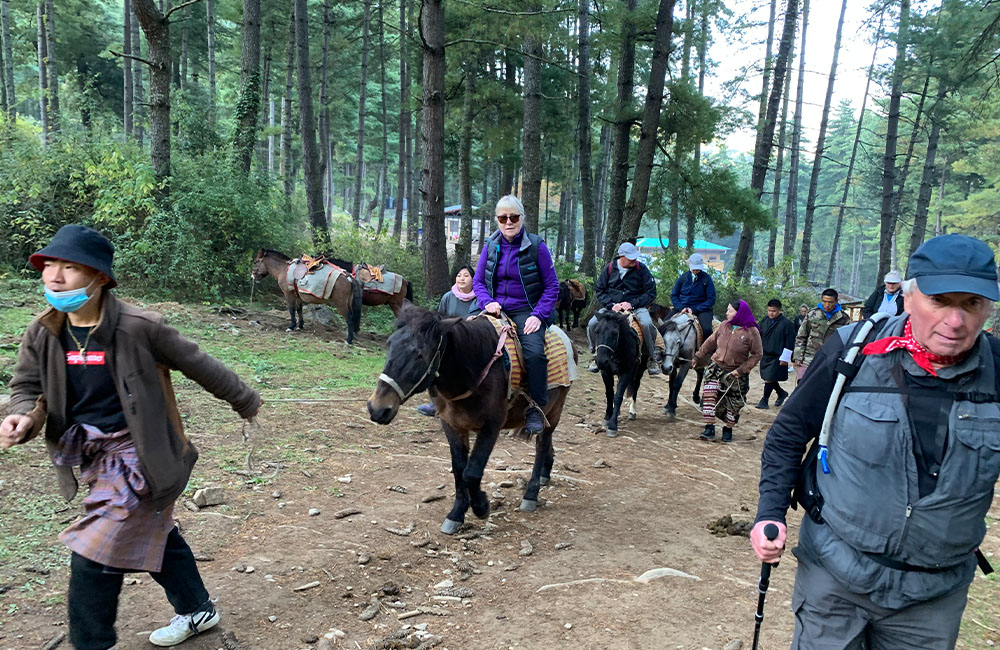
In the morning, take an excursion to Taktsang Monastery, also known as Tiger’s Nest. It is believed that Guru Rinpoche, founding father of the Bhutanese form of Mahayana Buddhism, arrived here on the back of a tigress and meditated at this monastery. The main structure was severely damaged by fire in 1998, but after many years of painstaking restoration work, the complex has now been fully restored to its former glory.The trail to the monastery climbs through beautiful pine forest and an occasional grove of fluttering prayer flags.
Kyichu Lhakhang: This Lhakhang, built in the 7th century, is one of the two oldest and most sacred shrines in Bhutan (the other being Jambey Lhakhang in Bumthang). Kyichu Lhakhang is composed of twin temples. The first temple was built by the Tibetan king, SongtsenGampo in the 7th century. In 1968, H.M. AshiKesang, the Queen Mother of Bhutan, arranged for a second temple to be built alongside the first one, in same style.
Rest of the day at leisure.
After an early breakfast at the hotel, drive to the airport for flight to your onward destination.
What is included
- Double room on twin sharing basis in government approved 3 star hotels
- Single room supplement is additional of USD 45 per night per room
- All three meals (does not cover water and other beverages ordered in hotels/restaurants)
- Bottled mineral water for the entire trip (except water ordered in the hotels and restaurants)
- Afternoon tea and snacks
- English speaking and knowledgeable guide
- Comfortable SUV and a reliable driver
- Museum entrance fees
- Visa fee and processing charges
- Tourism Development Fund
- Government taxes
- All administrative cost
- Full service & assistance before, during and after your Bhutan trip
Not included
- Airfare to and from Bhutan (we can arrange you tickets for you if you wish)
- Any other beverages (alcoholic or non-alcoholic) including water ordered in restaurants and hotels
- Travel or health insurance
- Wire transfer
- Laundry
- Gratuity/Tip for guides and drivers
Share this page :
Other Packages
Please note that some of the sights/itinerary may change due to season, weather, national holidays, and special events. We maintain the rights to alter the itinerary since tours are made in advance and unforeseen circumstances that mandate change may arise. Itinerary changes are made to improve your overall travel experience in Bhutan.
The driving and hiking times mentioned are approximate times and do not include breaks in the journey for sightseeing, photo/tea/meal/rest stops. There may be delays in transfer time due road conditions, road repair/widening works, inclement weather and other unforeseen circumstances. During the treks/hikes, there may be delays or diversion of hiking trails due to trail conditions, inclement weather and other unforeseen circumstances.